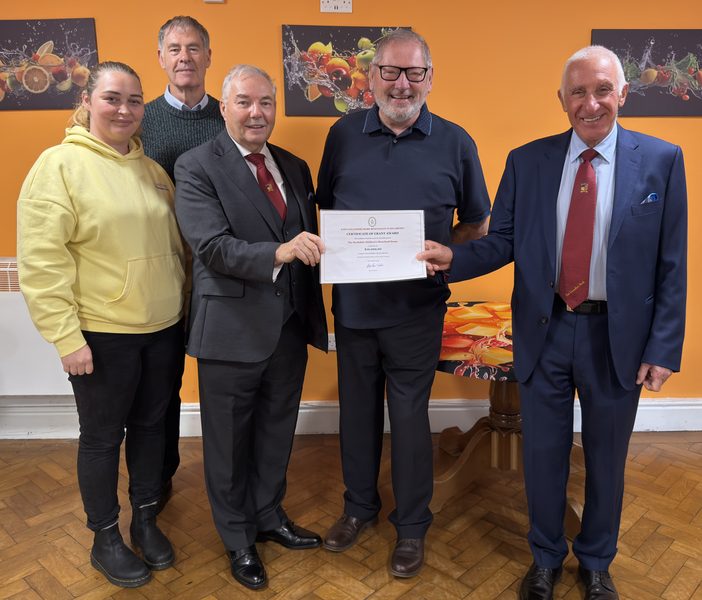
£10,000 from the East Lancashire Mark Benevolent Fund supports Rochdale Children’s Moorland Home and highlights why its work deserves wider support
We hope the ELMBF’s £10,000 donation will encourage other Lodges, Masonic Orders and Provinces, fellow fraternal organisations, charitable trusts and local businesses to consider what they could contribute.
A donation of £10,000 from The ELMBF is supporting Rochdale Children’s Moorland Home, a charity providing free holiday breaks for children facing some of life’s most difficult circumstances.
The visit, attended by W.Bro. Stephen Bolton and W.Bro. Ian Paul, both directors of The ELMBF, was an opportunity to look beyond the donation and understand the work it will help support. We were met by Bob Stelling (Secretary), Garry Bradbury (Treasurer) and Heather Bibbington (Deputy Matron and Fundraising Lead). Although the home had closed for its winter break, conversations with the team brought its purpose into sharp focus: giving children time away from difficult circumstances, opportunities to experience something new, and the freedom to enjoy being children.
It also revealed the considerable effort involved in keeping those opportunities available. Behind every holiday is a small, dedicated team, an ageing property that needs continual attention, and the ongoing challenge of raising enough money to keep the home running.
The ELMBF’s donation is an important contribution. It is also an opportunity to introduce this remarkable charity to others who could help sustain its work.
Much More Than a Week Away
Despite its name, Rochdale Children’s Moorland Home is not a permanent residential children’s home. It provides short holiday stays, with children generally arriving on a Monday and returning home on Friday. Referrals come through children’s services, schools and community organisations, and the breaks offer respite for children and their families. For some, this is their only opportunity for a holiday.
During the visit, staff explained that the children they support across Rochdale and Rossendale face a wide range of challenges. Financial hardship remains an important part of the picture, but the need extends much further.
Some children are coping with bereavement or serious family difficulties. Others are young carers, carrying responsibilities that leave little room for the experiences usually associated with childhood. The home also supports siblings of children with additional needs, whose own opportunities for holidays and individual attention can be harder to arrange around demanding family care routines.
Staff have been reaching out to schools to identify children who could benefit but may not be known to social services. A child grieving the loss of a parent, for example, may need time and support without having a social worker involved in their life.
A week away cannot remove those difficulties. It can, however, offer something valuable: a welcoming environment, companionship, activities to look forward to and a break from everyday pressures. For parents and carers, it can also provide some much-needed breathing space during an exceptionally difficult period.
The Importance of Ordinary Childhood Experiences
One of the most memorable parts of the visit was hearing about the children’s outings.
Staff described trips to Fleetwood, where some children experience the seaside for the first time. The feel of wet sand, the discovery that seawater tastes salty, and the simple pleasure of playing on a beach can all be entirely new. The charity’s own account of its work describes children who have never previously visited the seaside or encountered farm animals.
These are not extravagant holidays. They are experiences that many of us remember from our own childhoods, but which are not available to every child.
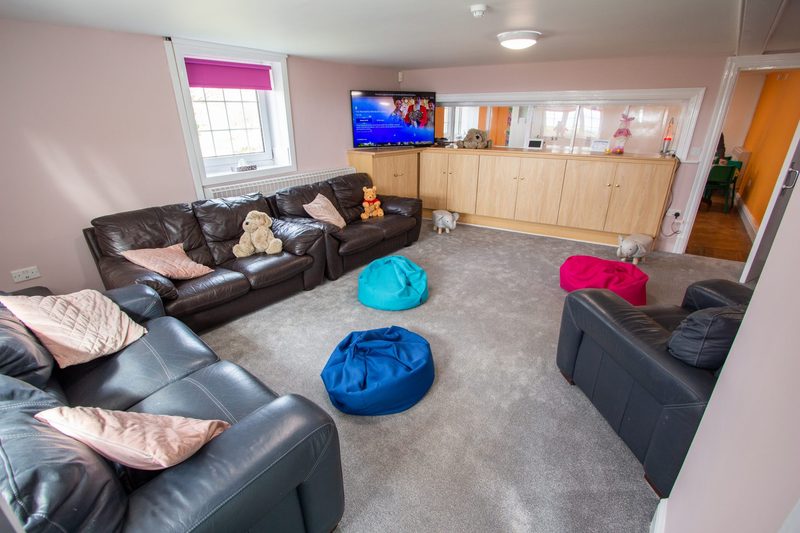
The same spirit runs through activities at the home. Staff described den building, campfires, woodland activities and outdoor play, alongside games and indoor recreation in “Ryan’s Den” when the weather prevents children from spending time outside.
There is a practical challenge behind these experiences. During the visit, staff explained that minibus transport alone can cost more than £200 for an outing, before any other expenses are considered. Rising costs have made it harder to take children off site as often as the team would like, increasing the importance of making the best possible use of the home’s own grounds and facilities.
For a potential supporter, this makes the connection between a donation and its purpose particularly clear. Help with transport, an activity or equipment could make an experience possible that would otherwise be difficult to afford.
Care That Goes Well Beyond Organising Activities
The work of Alison (Operations Manager) and her colleagues extends far beyond planning trips and keeping children entertained.
Staff explained that some children arrive without enough suitable clothing or basic toiletries. The home keeps supplies to meet these needs, alongside the everyday work of preparing meals, washing clothes and bedding, and making sure children have what they need for their stay.
There are also children who need reassurance and support during the night. Caring for them requires appropriate staffing, patience and an understanding that a child’s worries do not necessarily disappear at bedtime.
The team deliberately values a small, familiar group of staff, helping to create a family-like atmosphere during each week. Alongside that warmth sits the responsibility of safeguarding: the charity states that staff are appropriately qualified and experienced, with checks in place for those involved in its work.
Much of this care will never appear in a photograph of a day at the beach or a cheque presentation. Nevertheless, it is central to what the home provides, and it is part of what charitable support makes possible.
More Than 130 Years of Local Generosity
The home’s story is deeply rooted in Rochdale’s history.
Its published history dates its beginnings to 1894, when local philanthropist Robert Turner offered £20 to the Voluntary Aid Society to establish a holiday home for children living in poverty. Premises were found at Clay Clough Farm, and the first children arrived that July.
In 1925, Frederic Lye donated Nab Farm, providing the charity with the home it still occupies today. His generosity extended to paying for electricity to be installed and covering its first year’s electricity bill.
More than a century later, the connection between local generosity and practical care remains unmistakable.
The circumstances surrounding childhood have changed enormously since those first stays, but the value of a holiday, good food, outdoor play and attentive care remains readily understandable. Today’s supporters are helping to carry that work forward for a new generation.
Free For the Children, But Never Free to Provide
Rochdale Children’s Moorland Home receives no statutory funding. Its independence depends on raising and generating the income needed to maintain its services, with charitable donations, trusts, bequests and community support playing an essential role.
Staff explained that referrals from children’s services do not bring funding to cover the children’s stays. The charitable holiday breaks remain free.
The home also generates income through school use of its facilities. Schools now make contributions through an invoicing arrangement, helping to meet the costs of their visits while preserving the free breaks at the heart of the charity’s purpose.
Another source of income is the home’s investment fund. Staff explained that this helps meet core bills and contributes towards staffing costs. Protecting that capital matters because spending it down would reduce the income available to support the home in future years.
That income does not remove the need for fundraising. Food, heating, insurance, laundry, staffing and repairs must all be paid for, and the building still requires care when children are not staying. Investment funds are often overlooked or mis-understood in terms of their purpose for a charity such as this on.
Indeed, staff explained that the seasonal closure is driven principally by financial resources, rather than the weather alone. The challenge is not simply to provide enjoyable holidays when the home is open, but to ensure it remains ready and able to welcome children again.
Regular support is particularly valuable in this context. Alongside substantial one-off gifts, dependable donations can help the charity plan for the less visible but unavoidable costs of its work.
Looking After the Home and Improving What it Can Offer
Maintaining an old property and extensive grounds is a considerable undertaking for a small organisation.
During the visit, the team described continuing maintenance needs, including repairs to “Ryan’s Den” (an indoor playroom and classroom), alongside the wider challenge of keeping the buildings and grounds suitable for children’s stays.
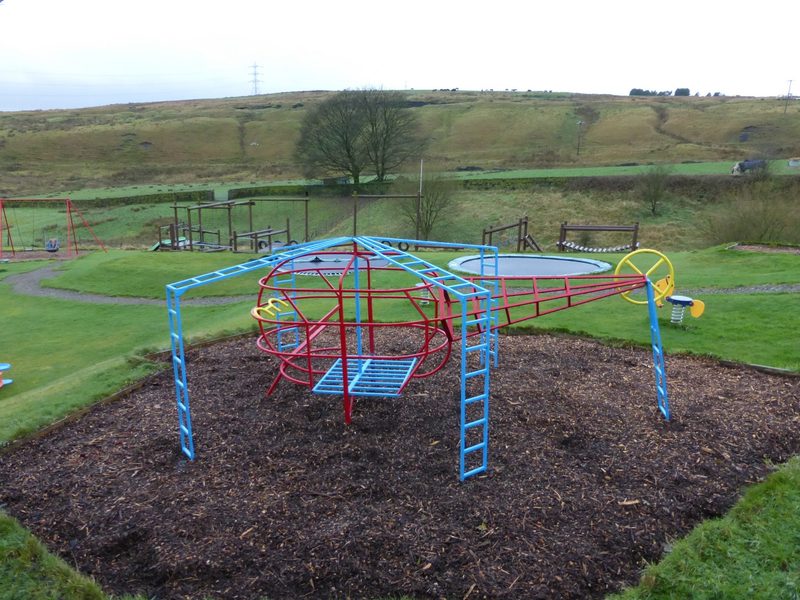
One significant ambition is to replace play equipment following the removal of the old metal helicopter structure, which had deteriorated beyond safe use.
Ideas under consideration include climbing features, towers and other activities designed around the natural slope of the site. This is a substantial project, but its purpose is straightforward. Better on-site play facilities would give children more opportunities to be active and enjoy themselves, particularly when the cost of transport limits outings.
The playground is not the only way to help. Repairs, replacement appliances, grounds maintenance and other practical improvements also support the home’s ability to operate. A donation towards everyday needs may attract less attention than a new facility, but its value should not be underestimated.
An Invitation to Lodges, Provinces and Local Businesses
The home has already benefited from the generosity of individuals, charitable organisations, businesses and service clubs. During the visit, staff spoke appreciatively of practical help and financial contributions from supporters including Rotary and Round Table.
There is an opportunity for others to become part of that continuing story.
That support need not take the same form in every case.
Practical assistance can also make a considerable difference. Staff explained that maintenance help is particularly useful outside the children’s holiday season. Businesses with appropriate building, decorating, plumbing, gardening or other skills could contact the home to discuss work that is needed and how it could be arranged.
Helping the Next Generation Make Happy Memories
The presentation of a cheque records an important act of generosity. The visit provided a deeper understanding of what lies behind it.
Behind the name Rochdale Children’s Moorland Home are children who need a break, families facing difficult circumstances, and staff working hard to make a week away feel welcoming, enjoyable and special.
The ELMBF is proud to support that work. Our hope is that this donation will also encourage others to look more closely at the home and consider becoming part of its future.
For children whose lives contain too much worry, the chance to spend a few days playing, exploring and making friends matters.
Together, we can help keep that chance available.
Support Rochdale Children’s Moorland Home
One-off and regular donations can be made through the charity’s website. Organisations interested in fundraising, practical assistance or a longer-term partnership can contact the home to discuss how best to help.
Telephone: 01706 960915
Email: info@rochdalechildrensmoorlandhome.org
Registered charity number: 1086973